
Drones in Construction: How They're Used on Melbourne Sites
Most of what you read about drones in construction is written by people selling software. On an actual Melbourne site the list of jobs is shorter, and more useful. A drone goes up for ten or fifteen minutes, gets photos nobody could take from the ground, and comes back down before the concrete truck needs the gate.
Here's what I see drones used for on building sites, and where they don't help.
Progress photos from above
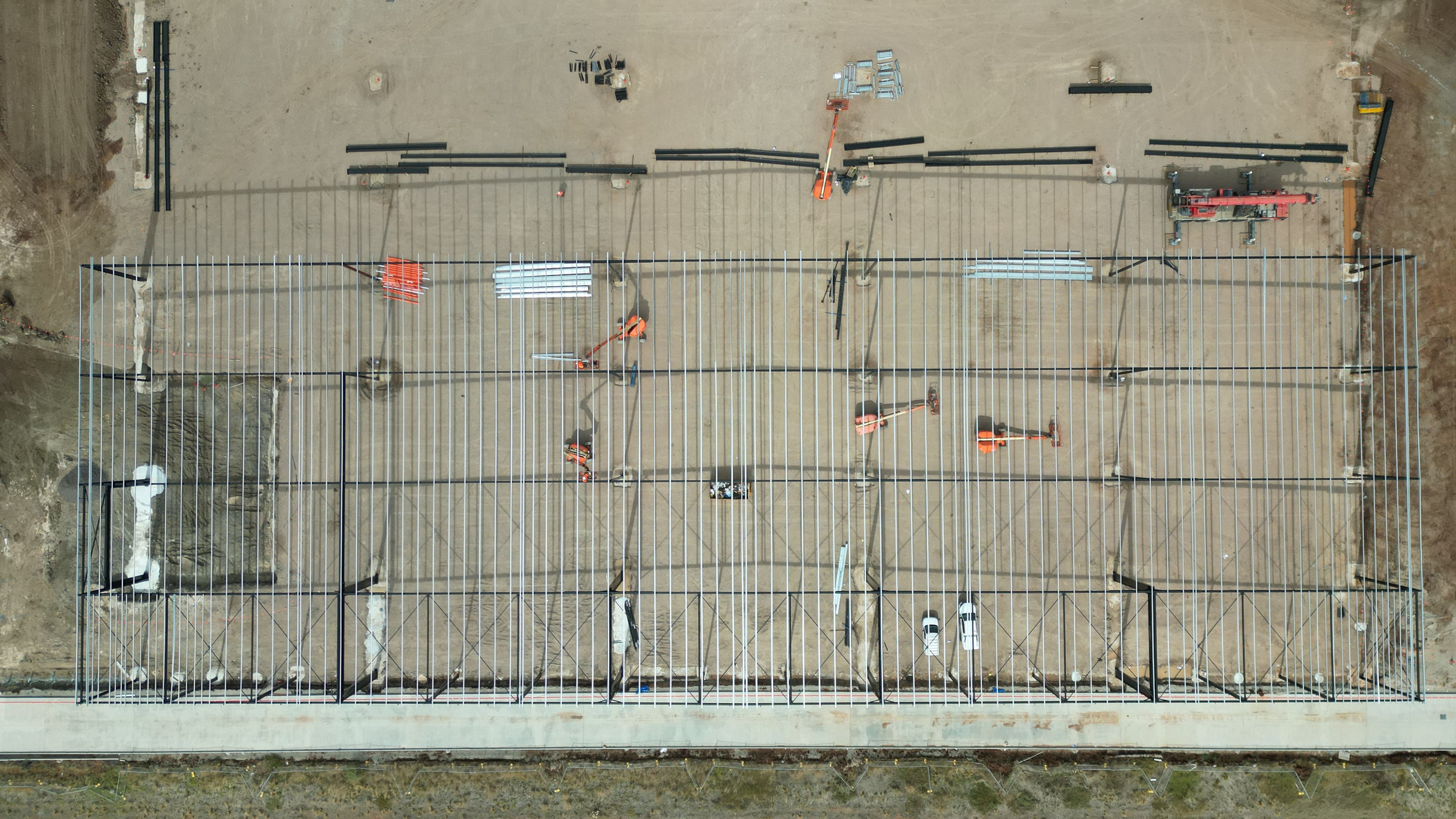
This is the big one. A photo from 40 or 60 metres up shows the whole site in one frame: slab, frame, roof, scaffold, laydown areas, the lot. Taken from the same spot each visit, those photos become a record of how the build moved.
Builders drop them into monthly reports and progress claims. A client in Sydney or overseas can see their Brunswick townhouses or Dandenong warehouse without a site visit. That's most of what we fly for on our construction progress photography jobs.
Checking things you can't easily reach
Roofs, gutters, parapets and the tops of tilt panels are awkward to look at from the ground. A drone can hover a few metres off a roof edge and get a close photo, without anyone going up a ladder or into a boom lift.
It won't replace a proper inspection by the trade or engineer who signs off on the work. It does tell them whether they need to go up at all, and where to look when they do.
Records for disputes and handover
When there's an argument about when something was done, a dated aerial photo settles it faster than anyone's memory. Same goes for the state of a neighbour's fence or the council footpath before work started.
Keep the original files with their dates. A cropped copy in an email is fine for a report, but the untouched file is what you want if a dispute gets serious.
Marketing and tenders
Finished project shots from the air look good on a website and in a tender document. A few frames from early in the build show the work in between, which is often what wins the next job. Plan for this from day one, because you can't go back and photograph the bare site once the slab is down.
What drones don't do well
They can't fly in every weather. Melbourne's wind and rain will push some visits back a day or two, so build some slack into the schedule.
They also don't see inside. Once the roof is on, the drone's job is mostly over apart from external finishes and landscaping. And some sites are hard to fly at all, like those near airports or right in the CBD, where extra approvals or a different plan may be needed.
The rules, in plain terms
In Australia, CASA regulates drones. Anyone flying for paid work or business has to register the drone and hold the right accreditation or licence, and some jobs need the operator to work under a CASA operator's certificate. There are general limits too, like staying under 120 metres and keeping clear of people who aren't part of the job.
Sites near Tullamarine, Essendon or Moorabbin airports can need extra steps before a flight. Check CASA's own pages or a CASA-verified drone safety app for the detail, because the rules change and depend on the location and the drone.
If you're hiring a pilot, ask them how they handle airspace for your address before you book. They should also do your site induction like any other contractor.
Getting started on your site
You don't need to buy a drone or train anyone. For most builders the simplest setup is a pilot who comes out on a fixed schedule, monthly for most houses and fortnightly while a commercial structure is going up, and sends the photos the same week.
If you've got a Melbourne project starting soon, send me the address and the rough timeline. I'll tell you what we can shoot and put a quote together.