
Construction Site Aerial Photos: What They Should Show
Construction site aerial photos are only useful if someone can open them months later and work out what was done and when. I've seen plenty of drone sets from Melbourne jobs that look great and answer none of those questions. A pretty sunset over a slab doesn't help a site manager who needs to show the boundary fence was up before the neighbour complained.
This is the checklist I use on site. Send it to whoever flies your job, or use it to check the photos you already have.
Start with the whole site
Every set should open with one wide shot that takes in all four boundaries. Include the street and at least one neighbouring roof so the frame can be placed on a map without guessing.
I shoot this from the same corner on every visit, usually at 60 to 90 metres, depending on lot size. On a narrow block in Brunswick that might be one frame. On a larger industrial lot out near Dandenong South it can take two or three overlapping shots.
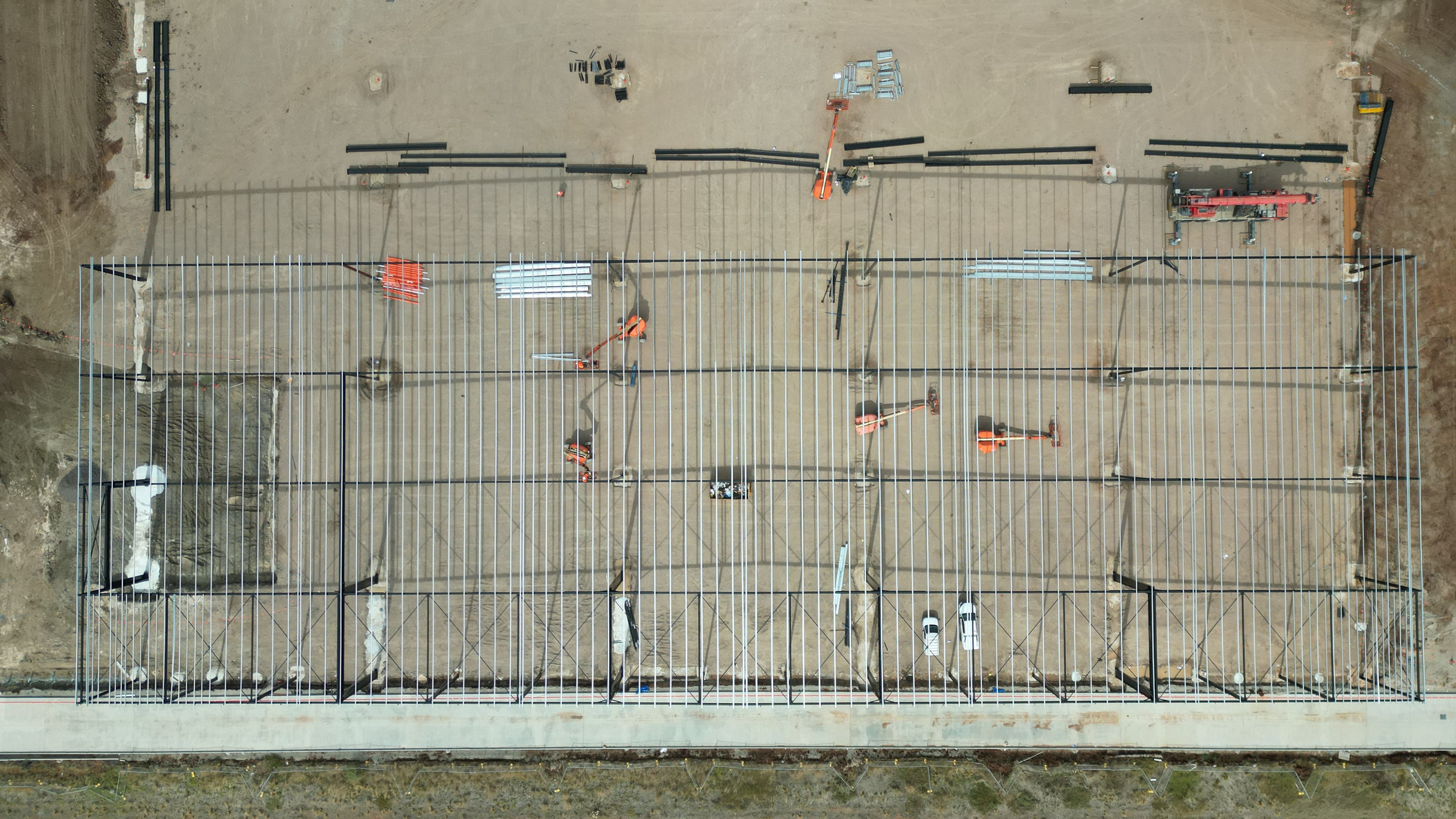
A straight top-down shot
Point the camera directly at the ground (90 degrees). This view reads like a site plan, so the PM can hold it up against the drawings and see where the footings, slab edges and services actually ended up.
A top-down shot is a picture, not a survey. It won't give you measurements you can rely on, and nobody should treat it like one.
What to capture at each stage
The shot list changes as the job moves. These are the things I make sure are in frame.
- Site establishment: fencing, gates, site sheds, the crossover, any tree protection zones and stockpiles.
- Earthworks and footings: excavation extents, trenches for services before backfill, and pier or footing layout.
- Slab: the pour itself if the timing works, set-out from above, and edge beams and penetrations before anything covers them.
- Frame and roof: wall frames from two opposite corners, roof trusses, and how close scaffolding sits to the boundaries.
- Lock-up and external finishes: cladding, roofing, windows and anything going on at the boundaries.
- Handover: the finished building, landscaping, driveway and the street frontage, cleaned up.
The ones people regret missing are services and slab penetrations. Once they're covered, an aerial taken a week earlier might be the only record anyone has.
Angles that help the people reading them
Besides the wide shot and the top-down, I take four oblique shots from roughly 45 degrees, one from each side of the site. Clients like these because they look like the building, not a plan.
For anything near a boundary, I add a lower shot that shows the gap between the works and the fence line. That's often the photo a builder wants when a neighbour or council asks a question.
Keep each visit comparable
A single set tells you what the site looked like on one day. A series tells you how the job progressed, which is where most of the use is. That only works if each visit repeats the same positions and heights. I wrote up how I do that in construction progress photos that line up, and how often to fly is covered in how often you should take progress photos.
Gaps I see in a lot of photo sets
- No date in the file name, so nobody can tell which month a frame is from.
- Only one angle, usually the most flattering one.
- Shot at midday in summer, with harsh shadows hiding half the frame.
- Low-resolution copies sent by text message, with the originals lost.
- Frames cropped so tight the boundaries are gone.
Melbourne weather adds its own problems. Gusty northerlies and quick showers mean some visits move by a day, so I'd rather book a window than a fixed hour.
The rules side
Anyone flying a drone for paid work in Australia has to follow CASA's rules. That includes registering the drone and holding the right licence or accreditation, staying under 120 metres and keeping clear of people who aren't part of the job. Sites near Essendon or Moorabbin airports need extra planning. I've covered the Melbourne airspace side in where you can fly a drone in Melbourne.
Getting a set done for your site
If you'd like aerial photos of your build that follow this checklist, have a look at our construction progress photography service or send the address and the stage you're at through the quote page. I'll tell you which shots I'd take first.